Compliance Is a Chain Not a Certificate
RoHS restricts the use of specific hazardous substances in electrical and electronic equipment. REACH regulates the registration, evaluation and authorisation of chemicals in the European Union. A magnetic component such as a transformer or inductor contains ferrite cores, enamelled copper wire, bobbins, tape, potting compound and sometimes adhesives, and every one of those materials has to be accounted for. A supplier that cannot trace a component back to each constituent material cannot make a credible compliance claim.
The Documents You Should Actually Receive
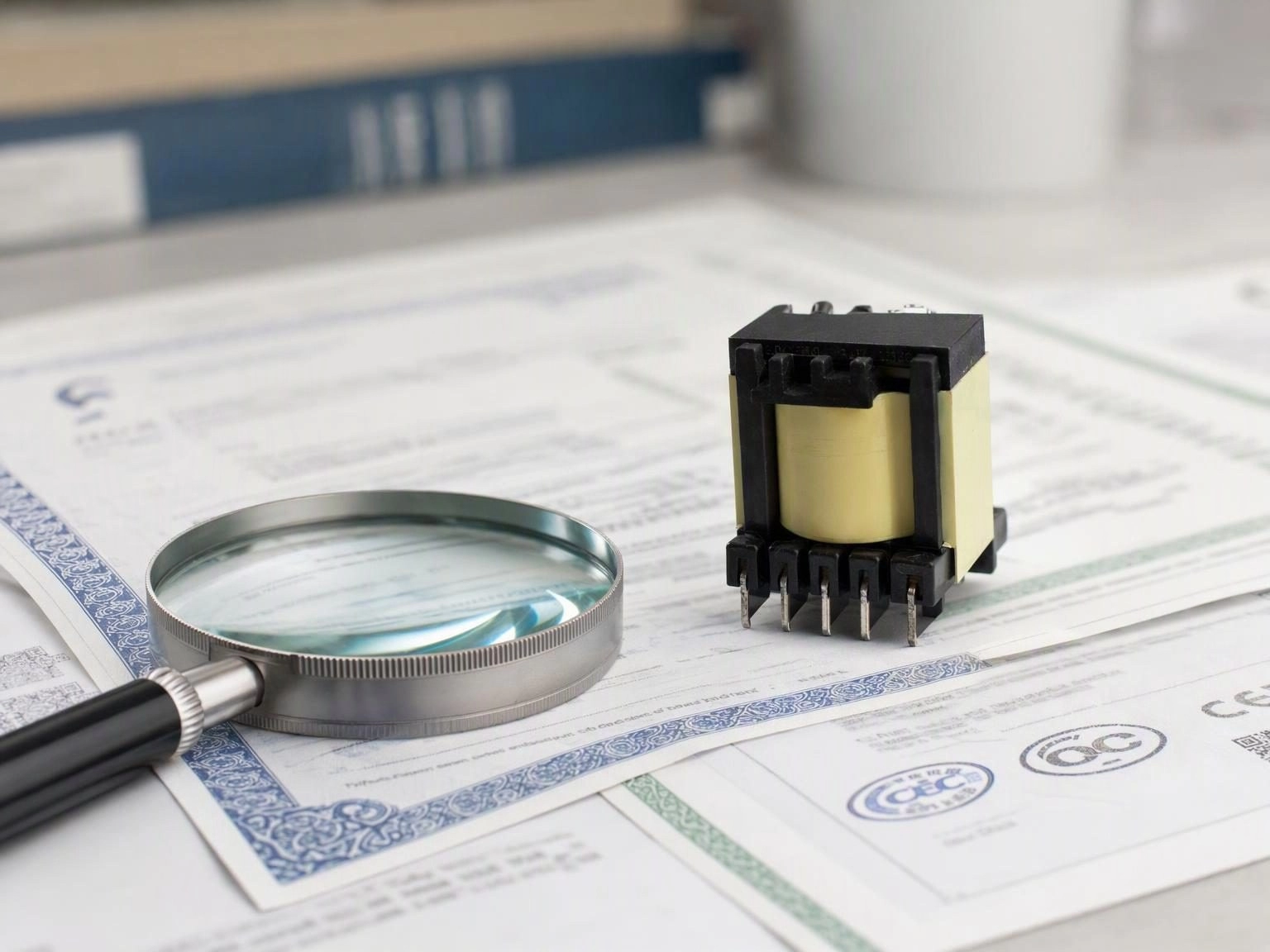
A credible compliance package for a magnetic component includes a material declaration covering the homogeneous materials in the part, a test report from a recognised laboratory for the substances under restriction, and a statement of the exemptions relied upon where applicable. For equipment makers selling into the European Union, REACH compliance also requires information on substances of very high concern present above the threshold concentration, and a statement on whether any such substance is present.
- RoHS test report from an accredited laboratory for the specific part
- Material declaration broken down by homogeneous material
- REACH statement covering substances of very high concern
- Safety certifications such as UL or TUV where the end product requires them
- A controlled document reference so the report can be tied to a production lot
Change Control Is Where Suppliers Fail
Many compliance failures do not come from a deliberately non compliant part. They come from an undocumented material substitution, a change of enamel supplier, a different wire coating, or a switch to a cheaper bobbin resin that contains a restricted substance. Without change control linked to the customer part number, the certificate the customer holds describes a component that is no longer being shipped.
Ask how a supplier notifies customers of material changes and how long the notification period is. A supplier that cannot answer this has a compliance process on paper only.
How to Verify a Supplier Claim
Request the report for the exact part number, check that the laboratory is accredited, confirm the report date against the production date of your shipments, and ask for a re-test if the supplier has changed materials. Where the end product needs UL, TUV or another safety mark, confirm the supplier can support the certification process rather than only supplying a RoHS report.
All raw materials we use are selected against RoHS and REACH requirements, and material declarations and test reports are provided on request. Where a customer end product requires UL or TUV approval, we cooperate with the certification process rather than treating the report as the end of the conversation.